
In August, many organisations start preparing their budget for the following year. When it comes to the 2027 IT budget, looking ahead is more important than ever before. Organisations need to factor in two clear challenges: the ongoing uncertainty in the hardware and IT services market, and the growing need to free up budget for AI applications.
How can organisations prepare for these challenges while staying on top of their IT budget? Floris Pelgrims, CFO at Cheops, explains which choices can already make a difference today.
“A well-developed IT budget doesn’t start with the investments organisations are already familiar with. It also takes into account market developments and new technologies that could affect costs in 2027. By factoring these developments into their budget planning, organisations reduce the risk of unexpected expenses or new technological ambitions putting pressure on their IT priorities and planning,” says Floris Pelgrims.
Anticipate rising prices and longer delivery times
Geopolitical tensions, fluctuating energy prices, and ongoing pressure on the global chip and hardware market could lead to higher prices and longer delivery times for servers, storage, network equipment, and end-user hardware in the coming months.
“Organisations planning replacements or expansions in 2027 need to take this into account . By mapping out their hardware needs and planned investments now, they reduce the risk of limited availability or higher purchase prices disrupting their planning and budget over the course of the year.”
Cheops is also taking proactive steps to limit the impact of market uncertainty on customers as much as possible. “We increased our cloud infrastructure investment earlier than planned. This allows us to keep guaranteeing the quality and continuity of our services and to hold on to our current rates for the time being. We recommend the same forward-looking approach to our customers,” Pelgrims explains.
AI as a new budget line
Alongside familiar investments in infrastructure, cloud, and cybersecurity, more and more organisations also want to free up resources for AI applications in 2027. Given that such investments are still relatively new for many organisations, it isn’t always easy to estimate in advance how much budget is needed for them.
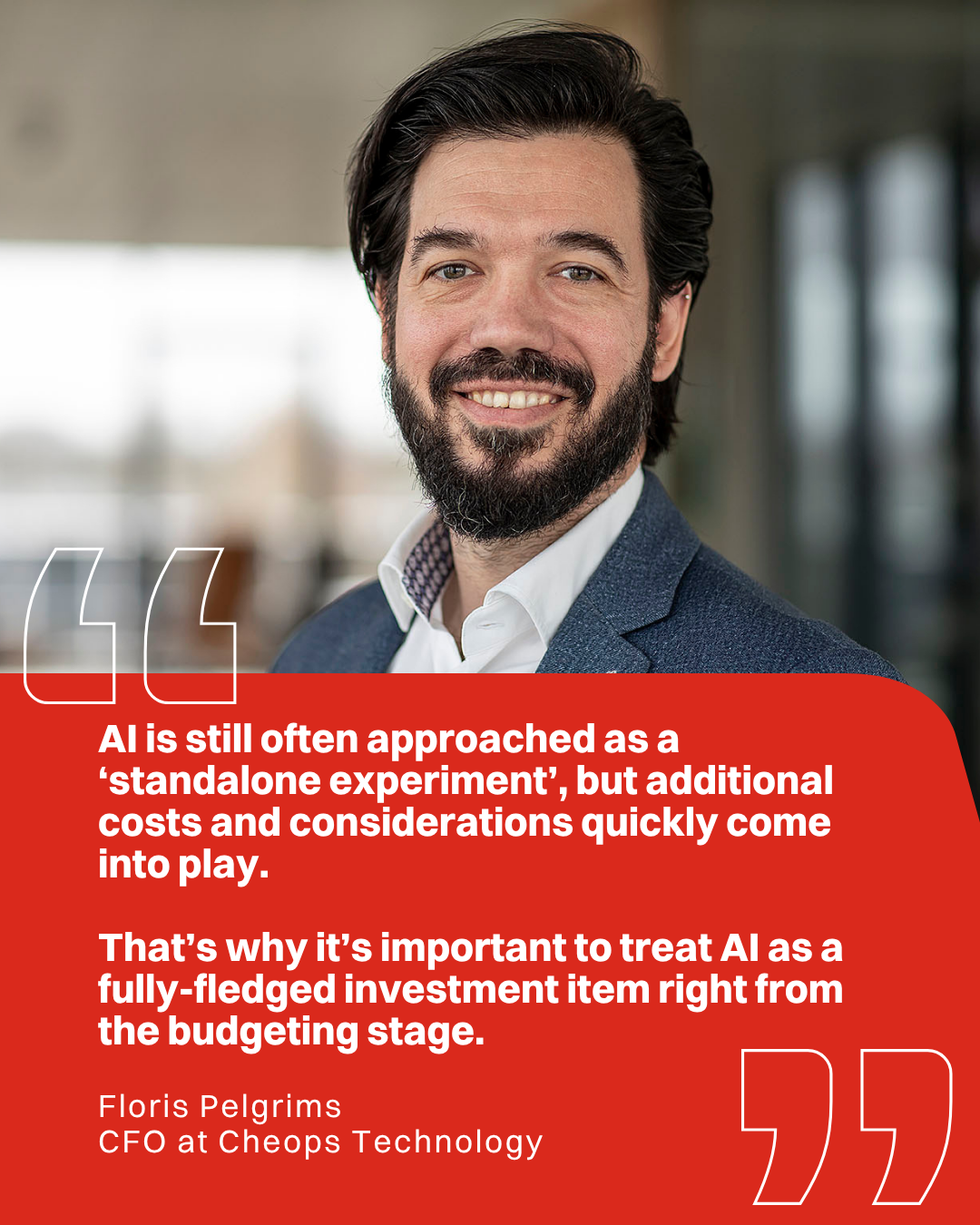
AI is still often approached as a ‘standalone experiment’, but additional costs and considerations quickly come into play. That’s why it’s important to treat AI as a fully-fledged investment item right from the budgeting stage, and to think carefully in advance about how you can use AI sustainably and securely.
The choice of AI tools and models used also has an impact on the budget. Not every application needs the most advanced and expensive AI model.
“A lighter model is often enough for simple tasks. It’s better to reserve more powerful, more expensive models for more complex tasks. This helps you avoid unnecessary costs and keep better control of your AI budget,” Floris explains.
This is important for AI services where the price depends partly on the number of AI tokens used. Tokens are the units of text that an AI model processes when reading a question and formulating an answer. The more tokens an AI solution uses, the higher the cost.
Six ways to keep on top of your IT budget
"In an uncertain and rapidly changing market, timely preparation and sufficient flexibility make all the difference. The way to build a more realistic IT budget for 2027 is by mapping out your IT needs, planned investments, and AI ambitions in good time."
The following points can help you anticipate possible price increases, limited availability, heightened cyber risks, and new AI investments, starting today:
- 1. Evaluate your IT environment and architecture in good time
A standardised or more cloud-based environment can reduce your dependence on hardware deliveries.
- 2. Consider service and subscription models
This makes IT costs more predictable and less dependent on price fluctuations.
- 3. Opt for leasing infrastructure
This keeps capital available within the organisation and spreads out investments, while keeping costs predictable.
- 4. Review your hardware planning in good time
IT asset management gives you insight into the lifecycle of your infrastructure, helping you respond better to possible price increases or longer delivery times.
- 5. Keep investing in cybersecurity
In this current uncertain climate, cybercrime continues to rise. To avoid negative impact and disruption, it’s important to put the necessary security measures in place. External initiatives can help here. Thanks to support measures from VLAIO, for example, you can have security analyses carried out with limited impact on your cost base.
- 6. Map out your AI applications before you budget
AI projects often start small but quickly grow in scale and cost. Map out in advance which AI applications are planned for 2027 – such as Copilot licences, automation, and data governance – so that these can also be closely monitored. In addition, set aside a separate budget line for AI governance and security.
Preparation and flexibility make the difference
Drawing up the 2027 IT budget is about more than doing an exercise based on last year’s expenditure. Organisations also need to take changing market conditions and new technological ambitions into account.
“Staying on top of your IT budget isn’t necessarily about investing more. It’s mainly about organisations consciously deciding which investments deliver strategic value and which costs they want to keep predictable. You can’t predict every market development, but you can prepare for it,” Floris Pelgrims concludes.
As an IT partner, Cheops helps organisations set the right priorities and keep their IT environment stable, secure and future-ready.
Do you also want to stay on top of your IT costs?
Let's put our heads together!