
Hacked reveals just how vulnerable companies currently are to cyberattacks. The Streamz series shows how hackers operate and highlights how often they infiltrate systems through seemingly small flaws. But how realistic is the series?
Cheops IT expert Arnaud Bosmans worked behind the scenes on the series while consulting for Banijay Belgium, the production company behind popular programmes including Familie, Mijn Restaurant and Temptation Island. In an environment that brings together creativity, deadlines and technology, cybersecurity suddenly becomes very tangible.
Can you briefly introduce yourself?
Arnaud Bosmans: “My background is actually in tax and accounting. After seven years in the financial sector, I switched to IT. I retrained and joined Cheops just over five years ago now. I started out in first-line support and soon progressed to second-line support, focusing more on systems and infrastructure. What appeals to me most is how diverse the job is: I get to work on many different aspects of IT and am constantly learning. A few years ago, I carried out a short assignment for production company Banijay Belgium. My name must have stuck, because I’ve been working in-house here for a year now.”
You worked on the Streamz series Hacked. What was that experience like for you?
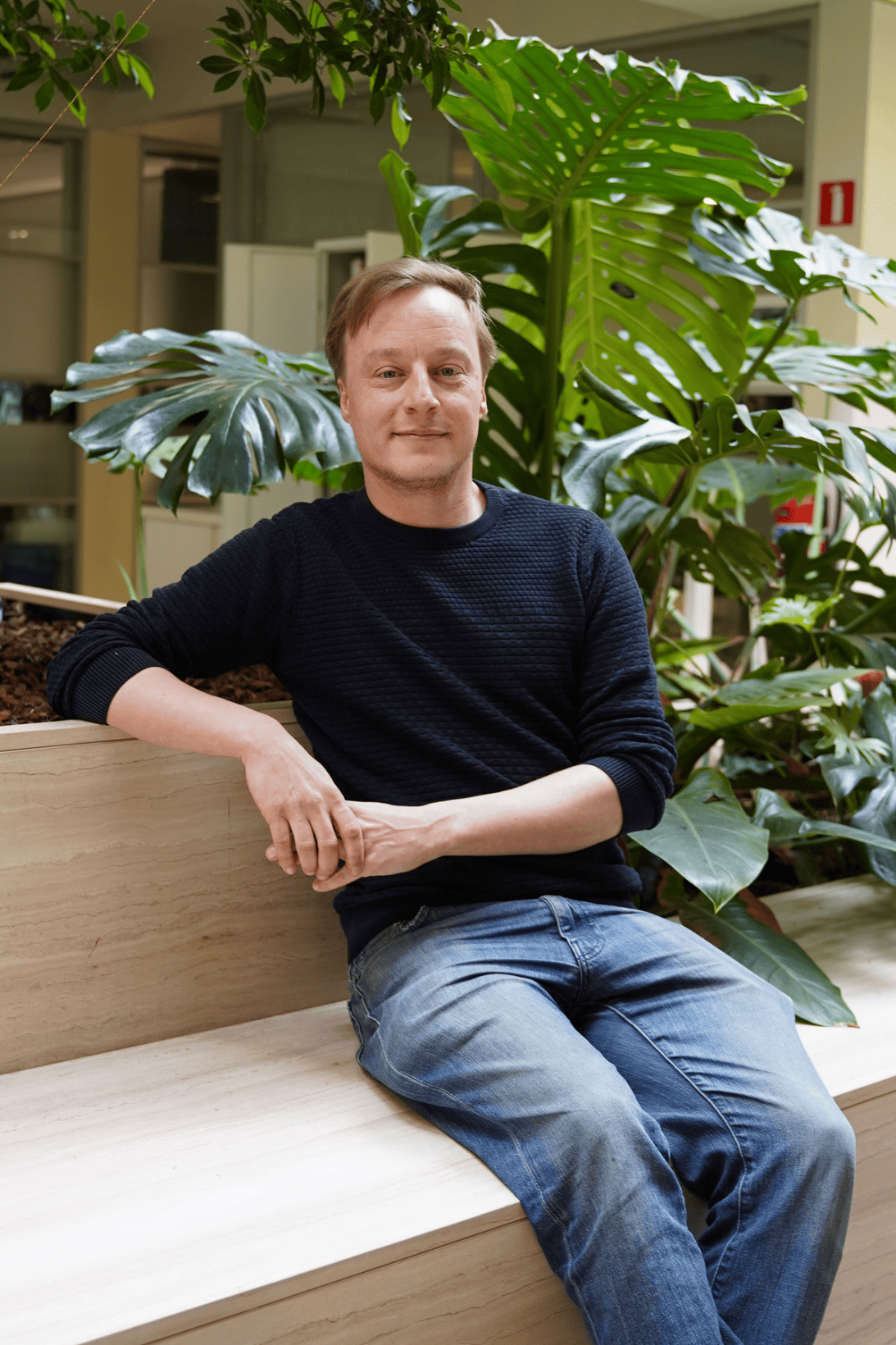
“It was my first real introduction to the media sector. I wasn’t on set myself, but played a supporting role from Banijay’s headquarters. My task was to ensure that the infrastructure, hardware and connectivity remained stable during the pre-production and filming phases. What struck me most was how much preparation goes into it all. Before the cameras even started rolling, they had already spent months working on research and technical setup. The series itself is actually more realistic than many people think. Of course, there is a certain level of sensationalism, but the vulnerabilities and techniques shown at Ordal, the City of Herentals and Upgrade Estate are very recognisable.”
Does the work you do for Banijay offer more variety than your senior support engineer role?
“Yes, it does. I am responsible for everything related to local IT: from day-to-day support to network management, systems and infrastructure. At the same time, I act as a link to the Benelux organisation. I identify needs, for example in terms of outdated hardware, storage capacity or post-production support. That post-production phase comes with quite a lot of technical complexity: editing suites, large files and remote access for editors all require a stable environment. It is not your typical IT context, which is exactly what makes it so interesting.”
What else makes IT in this kind of production environment different from a traditional company?
“The biggest difference is time pressure. In a production company, deadlines are really strict, because everything absolutely has to be delivered to the TV station on time. This means that systems have to be constantly up and running and that there is little room for delays. The workload is also less predictable: new productions, freelancers joining, or additional locations requiring stable network connections mean you need to be able to switch gears quickly. You have to be able to anticipate, but at the same time remain flexible when things change at the last minute.”
Where do you think the biggest cybersecurity risks lie today?
“The human factor remains by far the biggest risk. You can invest in technology and tools, but ultimately, it is people who make the decisions. Just a brief lapse in concentration – for example, clicking on a phishing email – can be enough to launch an attack. What makes it particularly challenging today is that attacks are becoming increasingly credible. With techniques like social engineering and AI, it is more and more difficult to know what is a genuine message and what is a scam. This makes awareness and training crucial.”
You can have the best security tools, but just one click on a phishing email is all hackers need to get in.
Arnaud Bosmans, IT-expert at Cheops
What do companies underestimate the most when it comes to cybersecurity?
“Typically, it is the balance between ease of use and security. If you make your systems too secure, people put up resistance and start looking for other ways to get their work done. But too little security of course also entails risks. This trade-off requires a carefully considered approach, where you look not only at technology but also at how you can help people work effectively.”
How can an IT expert add value here?
“As a Cheops consultant, I work in a range of environments and get to see how other organisations deal with similar challenges. I take those insights with me and can then apply them to a different context. This means I'm able to detect areas for improvement faster and provide more targeted advice. Especially in the field of cybersecurity, where best practices are constantly evolving, that experience offers clear added value.”
If you had to name one priority for businesses, what would it be?
“Awareness. Making people aware of risks and teaching them to recognise the signs. It may sound obvious, but it’s a real challenge in practice. Cybersecurity is not a one-off exercise, but something you have to keep focusing on, precisely because the tactics used by hackers are constantly changing.”
Which takeaways should viewers of Hacked reflect on in their own organisation?
“That no one is safe. Large organisations, smaller companies and individuals alike can be targeted. You often hear: ‘Why would they target me?’ But even a single entry point can be enough to infiltrate larger networks. Cybersecurity starts with vigilance and common sense, but after that a structural approach is needed.”
Find out what a Cheops IT expert can do for your organisation.
External IT experts provide not only technical knowledge but also a fresh perspective and experience from a range of different environments. This allows you to detect risks faster and accelerate improvements.